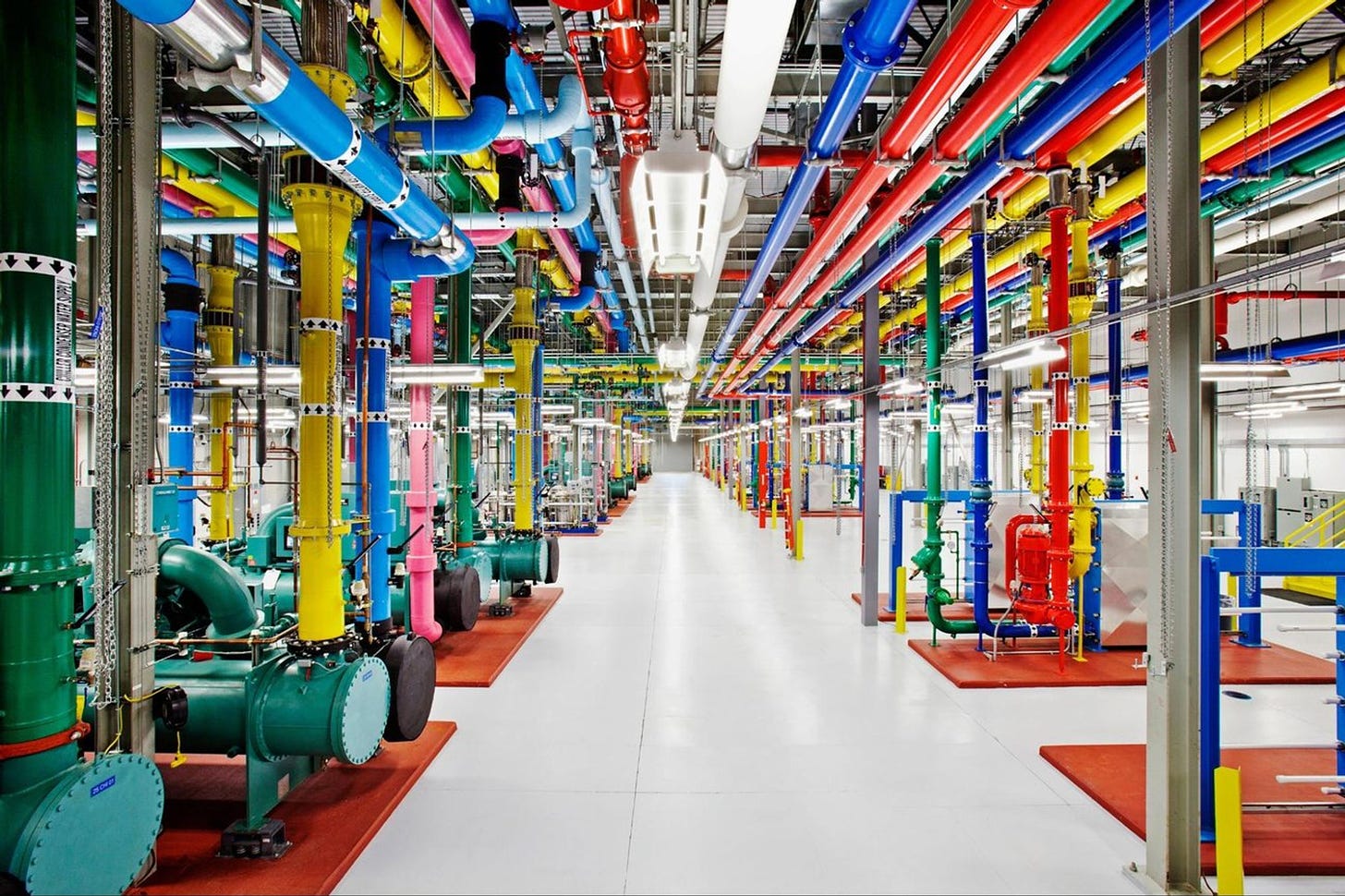
Traditional liquid cooling technologies generally encompass methods that use a fluid to transfer heat away from heat-generating components, but do so using simpler, more established techniques compared to advanced systems. Here are some of the commonly recognized traditional liquid cooling methods:
Chilled Water Systems
- Prevalence: Very High
- Description: These systems use a central chiller to cool water which is then pumped through pipes and coils located near or around the heat-generating elements.
- Mechanism: Chilled water absorbs heat from the environment or direct contact with components, then returns to the chiller where it is re-cooled.
- Data Center Use: Chilled water systems are among the most traditional and widely used liquid cooling methods in data centers. They use a central chiller to cool water, which is then circulated through cooling coils or air handlers. This technology is especially prevalent in larger and older data centers.
- Benefit: Chilled water systems offer high efficiency and capacity, making them suitable for large-scale deployments. They can be integrated into the building's HVAC system, allowing for centralized control and reduced operational costs. The use of water as a coolant is also more effective in absorbing heat compared to air, which enhances the overall cooling efficiency.
- Limitations:
- Complexity and Cost: Installing a chilled water system involves significant upfront costs and complexity. It requires space for large chillers and a network of piping, which may not be feasible in smaller data centers or retrofit situations.
- Maintenance: These systems require regular maintenance of chillers, pumps, and pipes to prevent leaks and ensure efficient operation. Failure to maintain the system properly can lead to inefficiencies or breakdowns, potentially causing downtime.
- Flexibility: Once installed, chilled water systems can be less flexible in terms of scaling or reconfiguring compared to more modular cooling solutions. Changes to the data center layout or expansion can require substantial modifications to the piping layout.
- Energy Consumption: While chilled water systems are efficient in heat removal, the chillers themselves can be significant consumers of energy, particularly if not optimized for part-load conditions common in dynamically changing IT environments.